
American retirees often arrive in Spain with end-of-life assumptions built from a US state system: a living will, a healthcare proxy, perhaps knowledge of "medical aid in dying" laws in a handful of states. Spain uses different language and a different legal architecture. The Spanish term in the law is prestacion de ayuda para morir, regulated by Ley Organica 3/2021. It can include administration by a health professional or self-administration of a prescribed substance under clinical supervision, but in both cases it is a formal medical procedure inside the National Health System. It is not the same thing as refusing treatment, palliative sedation, an advance healthcare directive, or a family decision after capacity has gone. For a US retiree living here on a non-lucrative visa, the most important point is simple: Spain does not treat assisted dying as a document you bring from America. It treats it as a Spanish legal and clinical process.
On this page
Not the same as a living will Who can request it The medical threshold The ordinary procedure Doctors and Commission review Where an advance directive fits Andalucia and regional routing Refusal, complaint and withdrawal Mistakes US retirees make Frequently asked questions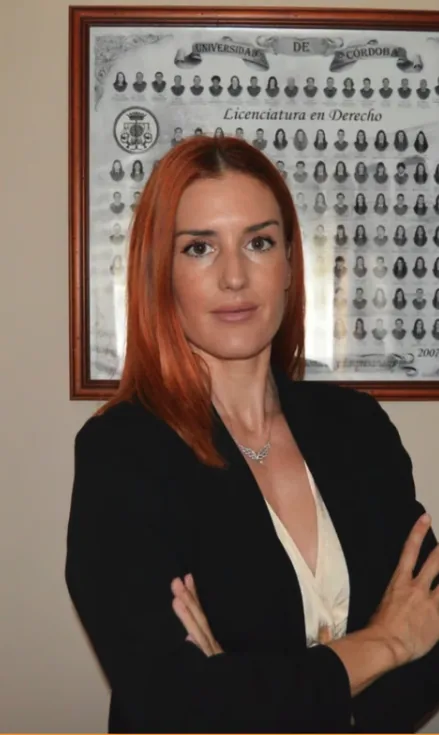
"The mistake is to put every end-of-life question into one paper. Your advance directive, your power of attorney, your will and Spain's euthanasia procedure answer different questions. If you live here, the practical plan is to make the Spanish documents early, tell your family where they are, and understand that assisted dying is a regulated medical process, not a sentence in a US living will."
— Lola Jurado · Registered lawyer, Ilustre Colegio de Abogados de Málaga (nº 10907)
Not the same as a living will
A Spanish advance healthcare directive records medical wishes for a future moment when you cannot express them. It can say which treatments you would refuse or accept, name a representative to speak with doctors, and record wishes about organ donation or your body after death. It is important, but it does not by itself grant assisted dying. The euthanasia law has its own threshold, timing, professional review and oversight. Writing "I request euthanasia" in a US living will, or even in a Spanish directive, is not the same as going through the procedure set by Ley Organica 3/2021.
The distinction matters because many retirees use "living will", "DNR", "healthcare proxy", "palliative care" and "assisted dying" as if they were one bundle. In Spain they are different legal tools. Refusing disproportionate treatment belongs to patient autonomy. Palliative sedation belongs to clinical end-of-life care. A poder preventivo handles money and legal acts if capacity fails. A will handles the estate after death. The prestacion de ayuda para morir is separate from all of them.
Who can request it
Article 5 of the law starts with status. The person must have Spanish nationality, legal residence in Spain, or a certificate of empadronamiento showing more than twelve months of permanence in Spanish territory. That means a US citizen is not excluded because they are foreign, but Spain is not offering a medical-tourism route. A retiree with a valid non-lucrative residence authorisation will usually be looking at the legal-residence branch; someone without residence would need the long-presence certificate branch and still meet every other requirement.
The applicant must also be of legal age and capable and conscious at the time of the request, unless the law's incapacity-and-prior-instruction provisions apply. The decision must be autonomous, conscious, informed and free from external pressure. The clinical record must show that the patient received and understood information about their process, alternatives and available care, including palliative care and dependency support where relevant.
The medical threshold
The law is deliberately narrow. It covers a person suffering either a serious and incurable illness or a serious, chronic and incapacitating condition that causes constant and intolerable physical or psychological suffering in the terms defined by the law. It is not available because a person is old, disabled, lonely, tired of living, worried about care costs, or unwilling to become dependent in the abstract. The relevant suffering must be tied to the medical situation and assessed through the statutory process.
This is also where US vocabulary can mislead. Some US state laws use a terminal-diagnosis model. Spain's law is not copied from one US state, and its categories and safeguards must be read on their own terms. A retiree should never assume that being eligible in Oregon, California or another US jurisdiction means they qualify in Spain, or the reverse. The Spanish file turns on the Spanish definitions, Spanish clinical record and Spanish review process.
The ordinary procedure
The ordinary route begins with a first written request to the responsible doctor. If the request is admitted, the doctor starts a deliberative process with the patient, normally within two calendar days, explaining diagnosis, therapeutic possibilities, expected results, palliative care and support alternatives. If the patient still wishes to continue, a second written request is made after at least fifteen calendar days. The law allows that interval to be shortened where loss of capacity is considered imminent and the clinical circumstances justify it.
After the second request, the deliberative process resumes and the doctor asks the patient to confirm whether they continue or desist. If the patient continues, informed consent is documented. The doctor then consults another physician with training in the relevant pathology, who reviews whether the conditions are met. The case then moves into the control system involving the regional Guarantee and Evaluation Commission before the aid is provided. That sequence is why this cannot be reduced to "sign a form". It is a documented clinical process with multiple checkpoints.
Doctors and Commission review
Three roles matter. The responsible doctor coordinates the process and deliberation. The consulting doctor independently reviews whether the medical conditions are met. The regional Comision de Garantia y Evaluacion provides the external safeguard, including prior verification through appointed members and later review that the procedure was carried out according to the law. Each autonomous community has its own Commission, so the regional layer is not cosmetic; it is built into the system.
For a foreign resident, that means the route is handled through the Spanish healthcare system and the autonomous community where care is being provided. Private insurance, a US doctor, a US directive or a family lawyer cannot bypass the Spanish physicians and Commission. They may help you prepare documents, understand your wishes or coordinate information, but they do not replace the statutory actors.
Where an advance directive fits
Spain's euthanasia law does recognise the possibility that a person may have made an advance healthcare directive, living will or legally equivalent document before losing capacity. That is why a registered Spanish directive can matter. It gives the treating team a Spanish-language, registry-visible statement of previously expressed wishes. But it still operates inside the law's medical and safeguard structure. It is evidence of will, not a private order to doctors.
The practical advice for US retirees is therefore boring and important: make the Spanish directive while you are well, register it in your autonomous community so it feeds the national RNIP system, name a realistic representative, and keep it aligned with your poder preventivo and Spanish will. If assisted dying is something you want to address, discuss the wording with a Spanish lawyer and your doctor. Do not rely on a paragraph copied from an American form.
Andalucia and regional routing
In Andalucia, the Servicio Andaluz de Salud describes the ayuda para morir as a publicly financed National Health System benefit, with procedure and guarantees under the state law. The region also has its own Guarantee and Evaluation Commission and publishes information and forms through Andalusian health and bioethics channels. For retirees in Malaga, Marbella, Fuengirola or elsewhere in the region, the practical first conversation is medical: with the treating team in the relevant public or authorised healthcare setting, not with a consulate.
That regional detail sits next to the broader end-of-life planning documents many foreign residents need in Andalucia: the Declaracion de Voluntad Vital Anticipada, registered through the Andalusian system; funeral and death-certificate planning, covered in what happens when a US retiree dies in Spain; and longer-term care planning, covered in long-term care and assisted living. They are related, but each has its own door.
Refusal, complaint and withdrawal
The responsible doctor can deny the request if the legal requirements are not met, and the refusal must be written and reasoned. The patient can normally challenge that refusal before the regional Guarantee and Evaluation Commission within the legal window. That is one reason the written decision and the clinical record matter: they show whether the issue is residence, capacity, the medical threshold, missing information, or the doctor's view that the statutory conditions are not satisfied.
The patient also remains in control of the request. They can revoke it at any time, and they can ask to postpone the provision. The procedure is built around current, informed will, not a one-way document signed months earlier. For families, this is often the hardest point emotionally but the clearest point legally: relatives do not request the procedure for the patient. The law is centred on the patient's own will, capacity and prior legally valid instructions.
Mistakes US retirees make
The first mistake is assuming that a US living will controls a Spanish assisted-dying process. It does not. The second is assuming that legal residence alone is enough. It is not; it is one requirement among many. The third is confusing palliative sedation, refusal of treatment and euthanasia. They are distinct medical and legal pathways. The fourth is waiting until capacity is already failing before making a Spanish advance directive and naming a representative. The fifth is leaving family in the United States to improvise across a time-zone gap, with English documents and no Spanish registry entry.
The calm version is to plan early and keep the categories separate. Use the non-lucrative visa and TIE to regularise your residence. Use the padrón and health-cover setup to anchor your Spanish life. Use the Spanish advance directive to record medical wishes. Use the poder preventivo for legal and financial incapacity. Use the Spanish will and funeral planning for death. And treat Spain's assisted-dying law as what it is: a narrow, rights-based, medically supervised procedure with safeguards, not a general end-of-life planning shortcut.
Frequently asked questions
Can a US citizen request euthanasia in Spain?
A foreign national is not excluded merely for being American. Article 5 of Ley Organica 3/2021 requires Spanish nationality, legal residence in Spain, or a certificate of empadronamiento showing more than twelve months of presence in Spain, plus majority age, capacity and consciousness at the time of the request, and the medical conditions set by the law.
Is euthanasia in Spain the same as writing a living will?
No. A Spanish advance healthcare directive records medical wishes for a future loss of capacity. Euthanasia or assisted dying is a separate public-health procedure under Ley Organica 3/2021, with its own eligibility test, repeated requests, medical review, consent and Commission oversight. A registered directive can be relevant if capacity is later lost, but it is not a shortcut around the procedure.
What medical situation qualifies?
The law is limited to a serious and incurable illness or a serious, chronic and incapacitating condition that causes constant and intolerable physical or psychological suffering in the terms defined by the law. It is not a general choice for old age, disability, loneliness, financial pressure or ordinary end-of-life planning.
How many requests are required?
The ordinary procedure starts with a first written request, a deliberative process with the responsible doctor, and a second written request at least fifteen days later, unless the clinical circumstances justify a shorter interval because loss of capacity is imminent. The process then continues through confirmation, consulting-doctor review and Commission control.
Can the request be refused?
Yes. The responsible doctor can deny the request if the legal conditions are not met, and the refusal must be reasoned in writing. The patient can normally complain to the regional Guarantee and Evaluation Commission within the legal window. This is why the actual clinical record and written decision matter.
General information only, not legal, medical or end-of-life advice. The prestacion de ayuda para morir is regulated by Ley Organica 3/2021 and applied through medical teams and regional Guarantee and Evaluation Commissions. Eligibility, capacity, diagnosis, timing, objections, complaints and the interaction with advance directives depend on the actual clinical record and the autonomous community procedure. Sources reviewed July 2026 include BOE-A-2021-4628 (Ley Organica 3/2021), the Ministry of Health's information for citizens and 2026 Manual de Buenas Practicas en Eutanasia, the Servicio Andaluz de Salud page on ayuda para morir, and Junta de Andalucia information on its Comision de Garantia y Evaluacion.