
Almost every long-term Spanish visa asks you to prove you have a clean criminal record, and the non-lucrative visa is no exception. For applicants coming from the United States, this looks deceptively simple — "just get a background check" — but it is one of the most common places a well-prepared file comes unstuck. The reason is that Spain is very specific about which criminal-record document it will accept, who must authenticate it, and how it must be translated. Get any of those three elements wrong and the whole certificate can be rejected, forcing you to start again and, often, to rebook a consular appointment. This page walks through the FBI background check, its apostille and its sworn translation as a single connected process, so you can assemble it once, correctly.
On this page
Why Spain wants a federal FBI check Which document: the FBI Identity History Summary How to obtain the FBI summary The apostille: Department of State, not the state The sworn translation into Spanish The correct order and the six-month window If you lived abroad in the last five years Common mistakes that cause rejection Frequently asked questions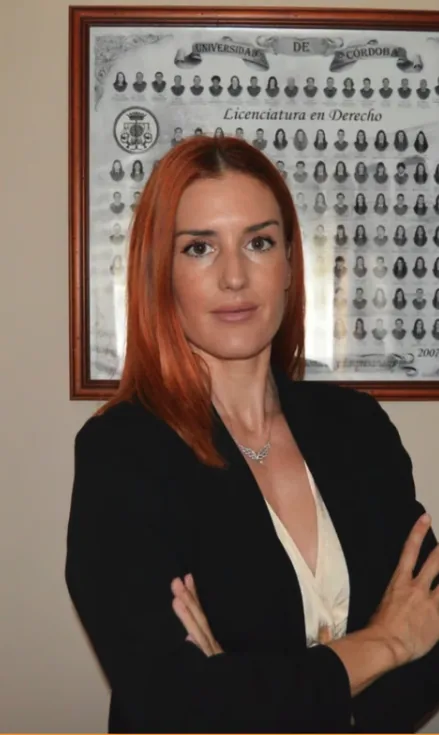
"The FBI check is where more clean non-lucrative files stumble than anywhere else — it must be the federal report, carry the right apostille, be translated by a sworn translator, and still sit inside its validity window at the consulate. Sequence those four steps and the criminal-record item stops being the risk it usually is."
— Lola Jurado · Immigration lawyer, Ilustre Colegio de Abogados de Málaga (nº 10907)
Why Spain wants a federal FBI check
The consular requirement is set out plainly: a criminal record check certificate dated no more than six months before the application, stating that the applicant has no criminal record in the places where they have resided for the past five years. For US nationals, Spanish consulates go a step further and specify the source. They want a background check verified by fingerprint comparison, issued by the US Department of Justice — Federal Bureau of Investigation (FBI). In the consulates' own words on the non-lucrative visa page, "we do not accept local police criminal certificates."
The logic is straightforward. A city or county police letter only reflects records held by that one jurisdiction. A federal, fingerprint-based check draws on the FBI's national database and is therefore treated as the authoritative statement of whether you have a US criminal history anywhere in the country. Because the non-lucrative visa leads to a residence permit, Spain applies the same standard it would to any long-stay applicant: a nationwide certificate, not a local one.
Which document: the FBI Identity History Summary
The document Spain is describing has an official name: the FBI Identity History Summary Check, sometimes called an "Identity History Summary" or, informally, an "FBI background check" or "FBI rap sheet." It is produced from a fingerprint submission and either lists the criminal history the FBI holds for you or confirms that there is no such record. That "no record" result — a certificate showing nothing on file — is exactly what a clean applicant submits to the consulate.
It is worth being precise here because applicants frequently arrive with the wrong paper. A commercial "instant background check" bought online, an employer screening report, a state police clearance or a court disposition are not the FBI Identity History Summary and will not satisfy the requirement. Only the FBI-issued, fingerprint-based summary meets the consular standard for US applicants.
How to obtain the FBI summary
There are two broad routes to the summary. The first is to request it directly from the FBI, submitting your fingerprints (typically on the standard FD-258 card, or electronically at a participating location) and paying the FBI's fee. The second is to use an FBI-approved Channeler — a private company authorised by the FBI to receive your fingerprints and return your summary, usually much faster than the direct route. Both produce the same underlying FBI Identity History Summary; the Channeler simply expedites delivery.
Speed matters more than most applicants expect, because this document sits on the critical path of the whole visa timeline. A direct FBI request returned by mail can take weeks, and that is before the document even reaches the apostille stage. Requesting the summary electronically, or through a reputable Channeler, is usually the difference between a comfortable timeline and a scramble. Whichever route you choose, make sure the result is a formal FBI Identity History Summary document that can then be authenticated — not merely a screen result or an unsigned printout.
The apostille: Department of State, not the state
This is the step that catches the largest number of otherwise careful applicants, so it deserves emphasis. Spain is a party to the Hague Apostille Convention, so foreign public documents are authenticated for use in Spain with an apostille rather than through embassy legalisation. But the apostille has to be issued by the authority competent for that kind of document.
The FBI Identity History Summary is a federal document. Federal documents are apostilled by the US Department of State's Office of Authentications in Washington, DC — not by a state Secretary of State. This is the crux of the problem: state offices apostille documents issued within their state (birth certificates, notarised papers, and the like), and many applicants reflexively send their FBI check to their home state's apostille office. A state apostille placed on a federal FBI document is generally not valid for this purpose, and Spanish consulates that specify the federal FBI check also specify the federal Department of State apostille.
In practice you mail (or have a courier deliver) your original FBI summary to the Office of Authentications with the required request form and fee, and it comes back with the apostille attached. Turnaround varies with the Department's current workload, so treat this as a step that can take time and cannot be rushed at the last minute. Because both obtaining and apostilling the summary are federal processes routed through Washington, some applicants use a single service or Channeler to handle the FBI request and the apostille together, which reduces the number of separate mailings.
The sworn translation into Spanish
Once the FBI summary carries its Department of State apostille, the certificate must be translated into Spanish. Spanish consulates require this translation to be done by a sworn or certified translator — for documents used inside Spain, that means a translator officially authorised by the Spanish Ministry of Foreign Affairs (a traductor jurado); from the US side, a certified translation prepared to the consulate's standard is what is requested. The translation should cover the FBI certificate itself.
Two details from the consular guidance are easy to miss and worth stating clearly. First, the translation does not need its own apostille — you are not authenticating the translator's signature at the Hague level for this document. Second, the apostille does not need to be translated as a separate object; it is the FBI certificate whose content the consulate must read in Spanish. Keeping those two points straight prevents both under-doing the file (no translation at all) and over-doing it (paying to apostille a translation that never needed it). The medical certificate has its own translation and legalisation risk, so do not assume the FBI apostille rule automatically answers the doctor's-letter question.
The correct order and the six-month window
Because these steps depend on one another, sequence is everything. The reliable order is:
- Obtain the FBI Identity History Summary (direct or via an approved Channeler).
- Apostille it at the US Department of State, Office of Authentications, Washington, DC.
- Sworn-translate the certificate into Spanish.
Apostille first, then translate — the apostille authenticates the original, and the translation is the final layer. Doing it the other way round routinely means paying twice.
Layered on top of the order is the six-month validity window. The certificate must be dated no more than six months before you submit your visa application. That creates a genuine timing puzzle, because the three steps above can together take a couple of months or more depending on FBI and Department of State turnaround. Start too late and you will not be ready for your appointment; start too early and the FBI summary can age out of the six-month window before you file. The safe approach is to map the whole timeline backwards from your intended submission date and trigger the FBI request so the finished, translated document lands comfortably inside the window. This is exactly the kind of coordination we walk clients through in the step-by-step non-lucrative visa process for US citizens and the NLV document validity calendar.
If you lived abroad in the last five years
The consular requirement is about where you have resided for the past five years, not only your current country. If, during those five years, you spent six months or more in another country, Spanish consulates generally expect you to submit that country's police record as well, again apostilled (or legalised, if the country is not part of the Hague Convention) and translated into Spanish. A US citizen who lived in, say, the United Kingdom or the UAE within the last five years will typically need both the FBI check and a certificate from that country.
This is easy to overlook and can surface late, when it is hardest to fix. If your five-year residence history spans more than one country, identify every place that triggers a certificate at the very start of your preparation, because a second country's police record has its own issuing process, apostille route and translation — none of which you want to discover in the final fortnight. Our guides on moving from the UK and from the UAE and Gulf touch on the local certificate side for those routes, and our page on police certificates from multiple countries explains how to sequence and translate several certificates at once.
Common mistakes that cause rejection
Nearly every problem with the criminal-record document falls into a short list of avoidable errors:
- Submitting a state or local police check instead of the fingerprint-based FBI Identity History Summary.
- Getting a state apostille from a Secretary of State on a federal FBI document, rather than the Department of State apostille from Washington, DC.
- Skipping the sworn translation, or translating before apostilling so the certificate has to be redone.
- Missing the six-month window — a summary obtained too early that has expired by the appointment date.
- Forgetting a second country's certificate after six months or more of residence abroad within the last five years.
- Providing an unofficial or "instant" report that is not a genuine FBI-issued summary at all.
Each of these is a process error, not a matter of whether you actually have a clean record — which is what makes them so frustrating and so preventable. The criminal-record document belongs alongside the rest of your file, and it helps to see it in context with the full non-lucrative visa document checklist and the broader apostille and sworn-translation guide. For the overall route, the non-lucrative (retirement) visa guide ties the pieces together, and common refusal reasons shows where documentation errors sit among the causes of a "no." If you are a US resident but not a US citizen, the FBI check is only half the criminal-record file: you normally add a police certificate from your country of nationality too.
Everything above assumes your FBI summary comes back clean. If instead you are worried about what it might show — an old DUI, a dismissed charge, an arrest from years ago — that is a different question from the paperwork, and we answer it separately in how a DUI or criminal record affects the non-lucrative visa. The same certificate resurfaces years later in an unexpected place: a Spanish weapons licence application requires a current criminal-record certificate too, which is one of several reasons firearms and residence turn out to be the same conversation.
Frequently asked questions
Does Spain accept a state or local police background check?
For US applicants, consulates ask for a fingerprint-based check issued by the US Department of Justice — FBI (the Identity History Summary). Local or state police certificates are generally not accepted in its place. If you spent six months or more in another country during the last five years, you may also need that country's police record, apostilled and translated.
Who apostilles an FBI background check for Spain?
The FBI Identity History Summary is a federal document, so its apostille must come from the US Department of State's Office of Authentications in Washington, DC — not a state Secretary of State. A state apostille on a federal FBI document is generally not valid, and is one of the most common reasons a file is rejected.
Do I apostille first or translate first?
Apostille first, then translate. The apostille authenticates the FBI certificate; the sworn translation into Spanish is the final step. Consulates typically note that the translation does not need its own apostille, and the apostille does not need to be translated.
How recent does the FBI check have to be?
Usually no more than six months old at the date you submit the application. Because obtaining, apostilling and translating the document all take time, plan the timeline backwards so the finished certificate lands inside the six-month window rather than ageing out before your appointment.
Can a service handle the FBI check and apostille together?
Yes. Because both the FBI request and the federal apostille route through Washington, some applicants use a single Channeler or service to obtain the summary and its Department of State apostille in one flow, then have it sworn-translated. Confirm the end result is a genuine FBI summary with a Department of State apostille.
General information, not legal advice. Consular document requirements and processing times change; verify the current criminal-record, apostille and translation rules with the Spanish consulate for your jurisdiction and confirm your specific circumstances before you file.