
Every year thousands of foreign nationals marry in Spain — some to a Spanish partner, some to another foreigner, and many simply because they have chosen to build a life here. The good news is that Spanish law does not close its registries to foreigners: you do not need to be Spanish, and you frequently do not even need to hold a residence card, to be married in Spain. The complexity lies not in whether you can marry, but in assembling the correct documents, having them legalised and translated to the standard the Civil Registry expects, and understanding that marriage and residency are two separate legal questions that people constantly confuse. This page walks through the legal requirements, the paperwork, the role of the Civil Registry, the preliminary marriage file, and what happens to your immigration status afterwards.
On this page
Civil versus religious marriage Legal requirements to marry in Spain Documents foreigners need Apostille, legalisation and sworn translation The role of the Civil Registry The preliminary marriage file (expediente matrimonial) Timelines and what to expect Do you need residency to marry? Marriage, residency and nationality afterwards Common mistakes foreigners make Frequently asked questions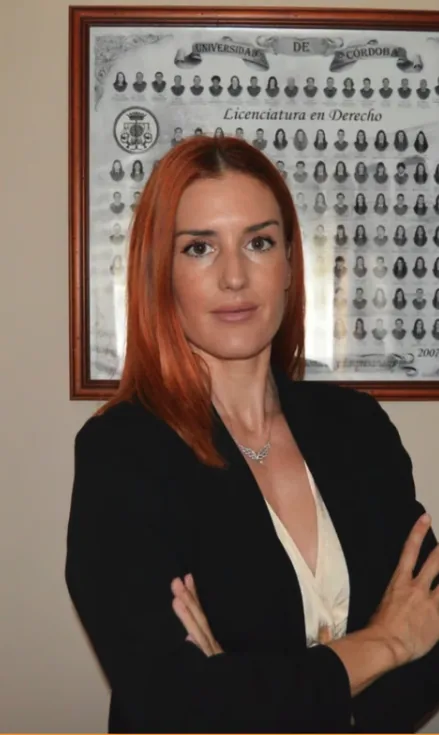
"Marrying in Spain as a foreigner is entirely possible, but the Civil Registry is exacting about how each document is legalised and translated. Assemble that file properly from the start, and think about how the marriage will interact with your residency before, not after, the wedding."
— Lola Jurado · Immigration lawyer, Ilustre Colegio de Abogados de Málaga (nº 10907)
Civil versus religious marriage
Spain recognises both civil and religious marriage, and both produce a valid marriage under Spanish law once registered. A civil marriage is celebrated before a public authority — historically a judge or the person in charge of the Civil Registry, and today frequently before a town-hall mayor or councillor, or before a notary. A religious marriage can be celebrated within the Catholic Church or within other confessions that have signed cooperation agreements with the Spanish State, and it produces civil effects once inscribed in the Civil Registry.
For most foreigners, and certainly for couples where the partners are of different nationalities or beliefs, the civil route is the simplest and the most predictable. Whichever path you choose, the same preliminary verification of your legal capacity to marry applies — the ceremony is only the visible end of a process that begins much earlier with the documentary file.
Legal requirements to marry in Spain
The substantive requirements to marry are straightforward, but they must all be satisfied and evidenced. In broad terms, each party must:
- Be of legal age or emancipated as Spanish law requires.
- Be free to marry — that is, not already bound by an existing, undissolved marriage.
- Not be within the degrees of kinship that Spanish law prohibits.
- Have the genuine intention and capacity to consent to the marriage.
These conditions look simple on paper, but for a foreigner each one has to be proven to the Spanish authorities using foreign-issued documents. That is where the process becomes technical, because a Spanish registrar cannot simply take your word that you are single or that you are of age — the documents must demonstrate it.
Documents foreigners need
The exact list depends on your nationality and on the specific Civil Registry, but a foreigner marrying in Spain will typically be asked to provide:
- Valid passport (and, where relevant, your residence card or NIE).
- Full birth certificate — usually a recent, complete extract, not a short-form summary.
- Certificate of no impediment / certificate of capacity to marry — a document from your home country's authorities confirming that, under your own law, you are free to marry. This is one of the most important and most frequently misunderstood documents.
- Proof of civil status — evidence that you are single, or, if you were previously married, a divorce decree, annulment or death certificate of a former spouse.
- Proof of residence or address — often a certificado de empadronamiento (town-hall registration) where one party lives in Spain, used to determine which Civil Registry is competent.
The certificate of no impediment is the document that most often derails a timeline — some countries do not issue one in a form Spain recognises, and an alternative affidavit or consular declaration is then required.
Because requirements differ so sharply by nationality, two couples marrying in the same town hall can face noticeably different paperwork. Confirming the precise list for your country before you request documents from abroad prevents ordering the wrong version and paying twice.
Apostille, legalisation and sworn translation
A foreign document has no automatic legal value in Spain in its raw form. Two additional steps are almost always required before a Civil Registry will accept it.
First, the document must be authenticated. For countries that are party to the Hague Convention, this means an apostille — a standardised certificate attached by the issuing country's competent authority. For countries outside the Convention, the document must instead go through diplomatic or consular legalisation, a longer chain of certifications. Documents issued within the European Union may benefit from simplified rules that reduce or remove the need for an apostille, but this must be checked case by case.
Second, once authenticated, the document usually must be accompanied by an official sworn translation into Spanish, produced by a translator authorised by the Spanish Ministry of Foreign Affairs (a traductor jurado). An ordinary translation is not enough. Skipping or mis-ordering these two steps — for example, translating a document before it is apostilled, when the apostille itself also needs translating — is one of the most common causes of a rejected file.
The role of the Civil Registry
The Civil Registry (Registro Civil) is the institution at the centre of any marriage in Spain. It performs two distinct functions. Before the wedding, it verifies that both parties genuinely meet the legal requirements to marry — this is the preliminary file described below. After the wedding, it is where the marriage is inscribed, which is the act that gives the marriage full legal effect and allows an official marriage certificate to be issued.
Which Civil Registry is competent generally depends on where the parties are domiciled, which is why proof of residence or town-hall registration matters. In practice, registries vary in their processing times, their document requirements and even their interpretation of certain points, so the experience of marrying in one Spanish city is not identical to another. This local variation is precisely why generic checklists found online are unreliable and why the requirements should always be confirmed with the competent registry for your case.
The preliminary marriage file (expediente matrimonial)
The heart of the process is the expediente matrimonial — the preliminary marriage file. Before any ceremony can take place, the couple opens this file with the competent authority and submits all of the documentation described above. The purpose is to allow the authorities to confirm that both parties are legally free and able to marry.
As part of the file, the couple is normally required to make sworn declarations, and in many cases the parties (and sometimes a witness) are interviewed, particularly where one party is a foreigner, to confirm that the marriage is genuine and freely consented to. This step exists to prevent marriages of convenience, and foreigners should not be alarmed by it — it is routine — but they should be prepared for it and answer consistently and truthfully.
Once the file is approved, the couple receives authorisation to marry, and the ceremony can then be scheduled. It is worth stressing that the file, not the wedding date, is the real bottleneck: couples who set a date before the file is approved frequently have to move it.
Timelines and what to expect
There is no single fixed timeline, because it depends on the Civil Registry, the nationalities involved, how quickly foreign documents can be obtained and legalised, and whether an interview is required. Realistically, a foreigner should assume the process takes several months from the moment they begin gathering documents to the wedding day, and should build in a comfortable margin.
| Stage | What happens |
|---|---|
| Gathering documents | Order birth certificate, certificate of no impediment, proof of civil status from your home country. |
| Legalisation & translation | Apostille or legalise each foreign document, then have a sworn translator render it into Spanish. |
| Opening the file | Submit the expediente matrimonial to the competent Civil Registry with all supporting evidence. |
| Verification / interview | Declarations and, where required, an interview to confirm the marriage is genuine. |
| Approval & ceremony | Authorisation is issued; the civil or religious ceremony is scheduled and celebrated. |
| Inscription | The marriage is inscribed in the Civil Registry and the marriage certificate is issued. |
Documents also have a shelf life: certificates of no impediment and some civil-status documents are only accepted if issued within a certain recent period, so ordering them too early can be as much of a problem as ordering them too late.
Do you need residency to marry?
This is the question foreigners ask most often, and the answer reassures many of them: you generally do not need to be a legal resident of Spain to marry here. Spanish law allows marriage in Spain in a range of situations — for example where at least one party is a Spanish national, or where one party is habitually resident in Spain. The key concept is usually habitual residence and the competent registry, rather than possession of a formal residence permit.
That said, "you don't need residency" is not the same as "immigration status is irrelevant." A person's presence in Spain must still be lawful, and someone who is in Spain on a short-stay basis should be careful about overstaying while a lengthy marriage file is processed. The interaction between your current immigration situation and the marriage timeline is exactly the kind of point that benefits from tailored advice, because getting it wrong can create problems that the marriage itself will not solve.
Marriage, residency and nationality afterwards
Marrying does not, by itself, hand you a residence card or a Spanish passport. What marriage can do is open the door to specific routes — but each of those routes is a separate application with its own conditions.
- Spouse of a Spanish or EU citizen — marriage to a Spanish or EU national can support an application to reside as the family member of that citizen. This is a distinct procedure with its own requirements; see our note on residency as the spouse of an EU citizen.
- Marriage-based residency generally — where the partner is a third-country national who is legally resident, family-reunification routes may apply. We cover the general landscape in marriage-based residency in Spain.
- Nationality — marriage to a Spanish national can shorten the residence period normally required before applying for Spanish nationality, but it does not confer nationality automatically; you still have to reside legally for the qualifying period and meet the other conditions.
The practical takeaway is to keep the two questions separate in your mind. The marriage file proves you are legally able to marry; the residency file proves you are entitled to live in Spain. Solving one does not automatically solve the other, and treating them as a single package is a frequent and costly mistake.
Common mistakes foreigners make
A handful of avoidable errors account for most delayed weddings. Being aware of them in advance is the single cheapest form of insurance.
- Assuming an ordinary translation is enough — only a sworn translation is accepted for the file.
- Translating before authenticating — the apostille or legalisation must be in place first, and it too usually needs translating.
- Letting documents expire — a certificate of no impediment obtained a year early may no longer be valid on the day the file is examined.
- Booking the venue before the file is approved — the wedding date should follow the authorisation, not precede it.
- Confusing marriage with residency — planning the wedding but forgetting that residence is a separate application with its own timeline.
None of these is difficult to avoid; they simply require sequencing the steps correctly and confirming the exact requirements for your nationality and your registry before you commit money or a date.
Frequently asked questions
Can two foreigners marry each other in Spain?
Yes, provided the competent Civil Registry is satisfied that the legal requirements are met — including habitual residence in Spain for at least one party in many cases — and that both parties can prove their capacity to marry with legalised, translated documents. The exact criteria vary by registry.
What is a certificate of no impediment?
It is a document from your home authorities confirming that, under your own law, you are free to marry. Not every country issues it in the same form, and where it cannot be obtained an alternative sworn declaration or consular document may be accepted.
How long does the whole process take?
Realistically several months, driven mainly by how fast you can obtain, legalise and translate foreign documents and by the processing times of the competent Civil Registry. Building in a generous margin is wise.
Does marrying a Spaniard make me Spanish?
No. It can shorten the legal-residence period required before applying for nationality, but you still have to reside legally for that period and meet the other conditions. Marriage alone does not confer nationality.
General information, not legal advice. Marriage and civil-registry requirements vary by nationality, by Civil Registry and over time, and must be confirmed for your specific circumstances before you rely on them. Nothing here creates a lawyer–client relationship.