
Lifetime giving is one of the quiet reasons wealthier Americans move abroad in retirement. You want to help a child buy a first home, fund a grandchild's education, or start passing on family money while you can still see it used well. In the United States that instinct is easy to act on: annual gifts under the exclusion are simple, the lifetime exemption is very large, and the person who might owe gift tax is you, the giver. Spain rearranges almost every part of that picture. This guide is for Americans considering or already holding the non-lucrative visa who plan to make gifts, not just leave an inheritance.
It does not replace US estate-planning advice or a Spanish tax review of a specific transfer. It explains the moving parts, so that before you wire money to a child or put a Spanish apartment in their name, you know which questions to ask. The core message is simple: a gift that costs nothing in the US can trigger real Spanish tax, and the person who gets caught is often not the one you expect.
On this page
The mirror-image problem: who pays How Spanish gift tax works Regional relief: Andalucia and Madrid The donor capital-gains trap The US side and the missing treaty Common gifting scenarios Common planning mistakes Frequently asked questions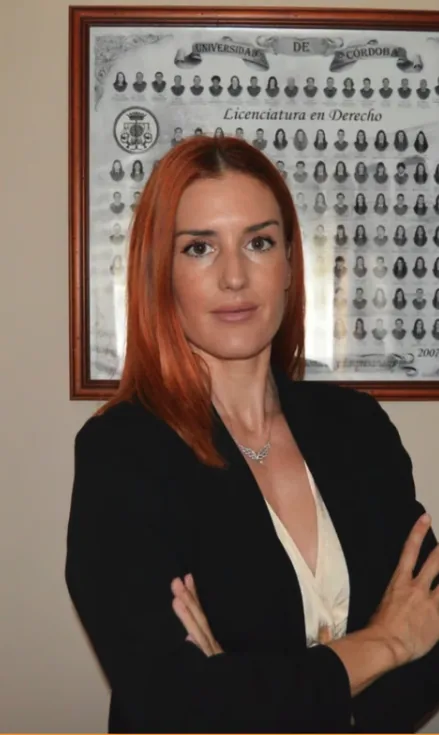
"American clients often arrive ready to gift the way they would at home, and are surprised to learn that in Spain the child pays, and that giving away an appreciated home can tax the parent as if they had sold it. Done in the right order, with the right region and the right relationship, close-family gifts can still be very efficient here. Done on instinct, they can cost far more than expected."
— Lola Jurado · Immigration lawyer, Ilustre Colegio de Abogados de Málaga (nº 10907)
The mirror-image problem: who pays
Start with the single fact that surprises Americans most. In the United States, gift tax is a concern of the giver. If you give someone more than the annual exclusion, you file a gift tax return and, in theory, you are the one who could owe tax. In Spain it is the exact opposite. Spanish gift tax, the donations side of the Impuesto sobre Sucesiones y Donaciones, is charged to the receiver. The child, grandchild or friend who accepts the gift is the taxpayer, files the Spanish form and pays any tax due.
That reversal matters the moment either you or the person receiving the gift has a link to Spain. If you have become a Spanish resident and you gift money to a child who is also living in Spain, that child is squarely inside the Spanish gift tax system. If you gift to a child back in the United States, the Spanish exposure depends on where the asset is and where the receiver lives, but the instinct that "I'll just handle the tax myself, like at home" does not translate. You cannot volunteer to be the Spanish taxpayer in the receiver's place.
How Spanish gift tax works
Spanish gift tax applies to lifetime transfers made without consideration: cash, a transfer of shares, a car, or real estate signed over to a family member. The receiver files Modelo 651, the self-assessment for the donations part of the tax, generally within 30 business days of the date the gift is perfected. Unlike inheritances, there is no death and no estate; the transfer happens while everyone is alive, which is precisely why the timing and the paperwork are under your control and worth planning.
Which region's rules apply is not a matter of choice, it follows connecting factors. For a gift of Spanish real estate, tax is handled in the autonomous community where the property is located, regardless of where giver and receiver live. For a gift of money, shares or other movable assets, tax follows the region where the receiver habitually resides on the date of the gift. This is why the same €100,000 handed to a child in Madrid, a child in Andalucia and a child in the United States can produce three different Spanish outcomes.
The amount is not a flat percentage. The taxable base is reduced by allowances, then a rate scale and multipliers apply, and both depend heavily on the kinship group. Spain sorts relatives into groups: Group I is descendants under 21; Group II is descendants aged 21 or over, spouses and ascendants such as parents and grandparents; more distant relatives and unrelated people fall into less favorable groups. Close family is treated far better than a niece, a friend or an unmarried partner who is not legally recognized. As with inheritance, the plan should start from who receives, not only how much.
Regional relief: Andalucia and Madrid
Here is the good news for US retirees on the Costa del Sol, and the reason the region genuinely matters. Spanish gift tax is largely devolved to the autonomous communities, and several of them apply very large rebates for close-family gifts. Andalucia, where Malaga and the Costa del Sol sit, applies a rebate of around 99 percent on the gift tax payable for close relatives in the most common cases. Madrid does the same for gifts between direct family, ascendants, descendants and spouses. In practice that can turn a frightening headline rate into a modest final bill for a gift from a parent to a child.
The rebate is not automatic and not unconditional. It depends on the relationship group, the type of asset, sometimes on formalizing the gift in a public deed before a notary, and always on the current version of regional law, which changes. A gift to a legally recognized spouse or child is treated very differently from a gift to a partner you never married or to a stepchild you never formally adopted. Do not assume that living in Andalucia makes every gift to anyone tax-free. It makes qualifying close-family gifts cheap, which is a real and valuable planning point, but the qualifying conditions have to be met on the facts.
The donor capital-gains trap
This is the point that catches even well-advised Americans, because there is no US equivalent. When you gift an appreciated asset in Spain, Spanish tax treats the gift as if you had sold it. As the giver, you can owe Spanish capital-gains tax on the difference between what you originally paid for the asset and its value on the day you give it away, even though you receive no money. For a Spanish tax resident this gain is taxed on the savings-income scale; for a non-resident giver a flat rate applies to Spanish-situs assets. In US terms this feels absurd: American rules use carryover basis for lifetime gifts and there is simply no gain to the giver. In Spain, giving away a Malaga apartment that has doubled in value can generate a personal income-tax bill for the giver on top of everything else.
Real estate gifts carry a second layer: the municipal plusvalia, a local tax on the increase in urban land value over the years you owned it. Add it up and a single family gift of Spanish property can involve three separate charges at once: the receiver's gift tax (reduced or not by regional relief), the giver's capital-gains tax, and the municipal plusvalia. This is why "just put the flat in my daughter's name" is rarely as clean as it sounds once you are inside the Spanish system, and why the choice between gifting now versus leaving property by will is a real tax decision, not just a sentimental one.
| Question | United States | Spain |
|---|---|---|
| Who is the taxpayer | The giver (files a gift tax return) | The receiver (files Modelo 651) |
| Gift of appreciated asset | No gain to the giver; receiver takes carryover basis | Giver can owe capital-gains tax as a deemed disposal |
| Real estate gift extras | Generally none federally on the transfer itself | Municipal plusvalia in addition to gift tax |
| Close-family relief | Large federal lifetime exemption | Regional rebates up to about 99% in Andalucia / Madrid |
| Cross-border treaty | No US-Spain gift or estate tax treaty; income treaty does not cover transfer taxes | |
The US side and the missing treaty
Becoming a Spanish resident does not remove you from the US gift tax system, because it follows US citizens worldwide. For 2026 the US annual gift tax exclusion is $19,000 per recipient, doubled to $38,000 if a gift is split with a spouse, and the lifetime gift and estate tax exemption is $15,000,000 per individual. For most retirees that means the US side of a family gift produces a filing at most, not an actual US tax bill. The catch is that the two systems do not connect. There is no US-Spain gift or estate tax treaty; the US-Spain income tax treaty specifically does not cover estate, gift or generation-skipping transfer taxes.
Because there is no treaty and because the two countries tax different people, the usual foreign-tax-credit reflex does not line up neatly. Spain taxes your child as the receiver; the US looks at you as the giver. You cannot assume a Spanish gift-tax cost paid by your child will offset a US position of yours, or vice versa. Where regional relief already reduces the Spanish bill to near zero, this is often a non-issue in practice, but where a gift falls outside close-family relief, or involves a receiver in the wrong place, double exposure is a genuine risk that has to be modeled before the transfer, not after.
Common gifting scenarios
A few recurring situations show how the pieces fit. Cash to a child living in Spain: the child is the Spanish taxpayer, files Modelo 651 in their region of residence, and close-family regional relief may make the bill small, but it still has to be declared. Cash to a child in the United States: the exposure turns on where the receiver lives and where the money sits; do not assume it is automatically Spanish, but do not assume it is automatically clear of Spain either. Gifting your Spanish home to a child: expect the receiver's gift tax, your own capital-gains tax as a deemed disposal, and the municipal plusvalia, which together often make waiting and passing property by will worth comparing. Helping with a Spanish property purchase: the way you structure the help, gift of cash versus buying jointly versus lending, changes who is taxed and how, and is worth deciding in advance rather than discovering afterward. Gifting the bare ownership and keeping the usufruct: the classic Spanish compromise between giving now and keeping control, valued in Spain by a flat statutory percentage — but a US donor should read our note on the nuda propiedad gift and US gift tax before the deed, because US law may not accept that the retained half is worth anything at all.
Alongside gifts, the broader private-client picture usually includes the wealth tax on your worldwide assets, the eventual inheritance side at death, and whether you need a Spanish will coordinated with your US plan. Lifetime gifting is one lever among several, and pulling it in isolation can undo savings elsewhere.
Common planning mistakes
The first mistake is importing the American reflex that "the giver handles the tax." In Spain the receiver is the taxpayer, and you cannot simply absorb their liability by wishing it. The second is assuming that Andalucia's generous relief covers everything: it is powerful for qualifying close-family gifts, but it depends on the relationship, the asset and current regional law, and it follows the receiver's residence for money gifts. The third, and the most expensive, is gifting appreciated Spanish property without realizing the giver can owe capital-gains tax plus plusvalia, on top of the receiver's gift tax.
The fourth is treating the US and Spain as one connected system. There is no gift or estate tax treaty, the two countries tax different people, and credits do not line up automatically. The fifth is ignoring formalities: many regional rebates and clean records depend on documenting the gift properly, often in a public deed before a notary, with the source of funds traceable. In a cross-border gift, the paperwork is not clerical detail; it is what makes the relief stand up and the transfer defensible. The safest sequence is to decide whether to gift, what and to whom, and only then how and when, with US and Spanish advice coordinated before anything moves.
Frequently asked questions
Who pays gift tax in Spain, the giver or the receiver?
The receiver. Spanish gift tax, the donations side of the Impuesto sobre Sucesiones y Donaciones, is charged to the person who receives the gift, not the person who makes it. That is the opposite of the United States, where the giver is generally responsible for the gift tax return. The receiver files Modelo 651 and pays any tax due.
Which Spanish form declares a gift, and when?
The receiver files Modelo 651, generally within 30 business days of the date the gift is perfected. The competent region is where Spanish real estate is located, or where the receiver habitually lives for gifts of money, shares and other movable assets.
Does Andalucia or Madrid reduce gift tax between parents and children?
They can, substantially. Both apply large rebates, in many common cases around 99 percent, on gift tax payable for close family such as children, grandchildren, spouses and parents. The result depends on the relationship group, the region, the asset and current regional law, so it must be confirmed before relying on it.
If I gift appreciated property, do I pay tax as the giver in Spain?
You can. Spain treats a gift of an appreciated asset as a deemed disposal for the giver, so you may owe Spanish capital-gains tax on the increase in value since you acquired it, even though you receive no money. Real estate gifts also trigger the municipal plusvalia. This has no direct US equivalent, where lifetime gifts use carryover basis with no gain to the giver.
Is there a US-Spain gift tax treaty?
No. The US-Spain income tax treaty does not cover estate, gift or generation-skipping transfer taxes. Because the two systems also tax different people, the giver in the US and the receiver in Spain, credits do not line up automatically, and cross-border gifts should be modeled with US and Spanish advisers before the transfer.
Sources reviewed July 2026: BOE consolidated text of Ley 29/1987 del Impuesto sobre Sucesiones y Donaciones; Spanish Tax Agency pages on the donations tax, Modelo 651 and competence rules between the State and autonomous communities; Andalucia and Madrid regional gift tax relief for kinship Groups I and II; Spanish personal income tax treatment of gifts of appreciated assets as a deemed disposal and the municipal plusvalia on urban land; IRS guidance for 2026 on the $19,000 annual gift tax exclusion and the $15,000,000 unified estate and gift tax exemption; and confirmation that the US-Spain income tax treaty does not cover estate, gift or generation-skipping transfer taxes. General information only, not legal, tax, estate-planning or immigration advice. Spanish gift tax, regional relief and US gift tax positions should be confirmed with qualified US and Spanish advisers before making any transfer.