
Our guide to what happens when a US retiree dies in Spain deals with the first wave: body, funeral home, cremation or repatriation, Spanish death certificate and the Consular Report of Death Abroad. Whether a couple should pre-fund that first wave with a Spanish seguro de decesos is a separate planning decision. This page is about the quieter second wave. It starts after the first calls have been made and usually lands on the surviving spouse while everyone else thinks the urgent part is over.
For a retired couple in Spain, daily life is held together by a chain of records: the TIE card, the padrón, the health-insurance policy, the rental or property file, the Spanish bank account and the domiciliaciones that pay the bills. A death touches almost every link. The mistake is to treat each item as a separate errand. They need to be sequenced, because changing a bank account can break a utility payment, changing a utility holder can affect address evidence, and failing to preserve statements can make the inheritance file harder later.
This is general information for US retirees and other non-EU residents in Spain, not probate, banking, tax or immigration advice. The right order depends on how the couple's authorisations were granted, how the accounts are titled, whose name is on the lease or deed, and whether the survivor plans to stay in Spain, return to the United States or move closer to family elsewhere.
On this page
The second wave nobody plans The survivor's TIE and residence status Padrón and address evidence Bank accounts before and after notification Direct debits that keep the home alive Health insurance and medical cover Tax, inheritance and notifications The practical checklist Frequently asked questions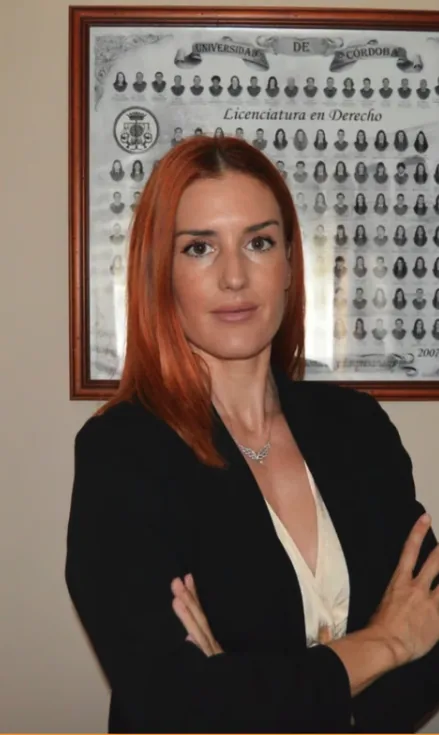
"After a death, the surviving spouse needs two files, not one: the estate file for the person who died and the continuity file for the person who is still living in Spain. Mixing them is how bank, padrón and renewal problems start."
— Lola Jurado · Immigration lawyer, Ilustre Colegio de Abogados de Málaga (nº 10907)
The second wave nobody plans
The first administrative wave after a death is visible. A doctor certifies the death, the funeral home is instructed, the Registro Civil registration starts, the consulate is contacted if the deceased was American, and the family chooses burial, cremation or repatriation. Those steps are intense, but there is usually a professional standing in front of the family telling them what has to happen next.
The second wave is less visible because no single professional owns it. The town hall owns the padrón. The National Police and immigration offices own the TIE process. The bank owns account access. The insurer owns the policy. Utility companies own the contracts. The tax authorities own tax notifications and later inheritance filings. Each system asks a narrow question; the surviving spouse has to make the answers line up.
That is why the first rule is evidence preservation. Before closing, changing or notifying more than necessary, copy the documents that prove the current position: TIE cards, passports, padrón certificates, lease or deed, insurance cards and policy schedules, bank statements, IBANs, direct-debit lists, utility invoices, community-fee notices, tax letters and digital-certificate access routes. You may later decide to cancel, retitle or replace all of them. But if you do it before saving the trail, the survivor can lose the easiest proof of how the household worked.
The survivor's TIE and residence status
For many retired couples, each spouse holds their own non-lucrative residence authorisation and their own TIE. In that ordinary case, one spouse's death does not automatically cancel the survivor's TIE. The card belongs to the survivor, carries the survivor's NIE and proves the survivor's own status until its expiry. The risk appears at the next renewal, not necessarily on the day of death.
A renewal file still has to prove the things it always proves: sufficient means, qualifying health cover, real residence in Spain, address evidence and no disqualifying gaps. If the deceased spouse was the one receiving the pension, holding the main account, paying the insurance or holding the lease, the survivor's next renewal may suddenly look weaker unless the file is rebuilt quickly. Survivor benefits, inherited income, account retitling and a new policy holder may all be perfectly workable, but they need documents.
Other statuses are more fact-specific. A person resident as a family member of an EU citizen, or through a family relationship rather than an independent authorisation, should not assume the answer is the same. Death can trigger retention rules, changes of card type or additional evidence. That is a legal-status question, not a bank-admin question, and it should be checked before the survivor travels, renews or lets a card expire.
The immediate action is simple: calendar the survivor's TIE expiry date, identify the legal basis printed on or behind the card, and list the evidence that will support the next renewal without the deceased spouse. If a renewal is due within months, treat the death certificate and the new income/insurance evidence as part of the immigration file from the beginning.
Padrón and address evidence
The padrón is the municipal register of inhabitants. It is not a residence permit, but it is the address record that Spanish systems keep asking for: TIE appointments, healthcare registration, local services, some bank checks and renewal evidence. When one spouse dies, the deceased person must eventually be removed from the municipal register. Official padrón rules allow a deceased resident to be removed with the family book or death certificate, and civil-registry data can also be transmitted to update municipal records.
For the survivor, the question is not just "how do I cancel my spouse's padrón?" It is "what does my own address evidence look like after the household changes?" If the lease was in the deceased spouse's name, ask the landlord to document the survivor's right to remain. If the home was owned jointly, preserve the deed, property-tax receipts and community-fee notices before the inheritance process changes title. If the utility contracts were all in the deceased spouse's name, change them deliberately rather than all at once and keep invoices before and after the change.
A fresh padrón certificate for the survivor, issued after the death once the address position is stable, can become a useful anchor. It proves the survivor is still registered at the home. It does not prove the whole legal right to occupy it, but it is the document many Spanish offices recognise first. Pair it with the lease, deed, utility bills and bank statements and the residence story becomes coherent.
This matters especially where the couple had just arrived. In the first year, a non-lucrative resident may not yet have a long Spanish paper trail. A few months of clean padrón, utility and bank evidence can carry a lot of weight later. Losing continuity because every contract was cancelled in the deceased spouse's name is avoidable.
Bank accounts before and after notification
Spanish banks are compliance-driven institutions. Once a bank is notified that an account holder has died, it may restrict operations connected to that holder until it sees the documents it needs: death certificate, certificate of last wills, will or declaration of heirs, inheritance-tax paperwork and instructions from the authorised heirs. The exact treatment depends on whether the account was sole, joint, or had authorised signers, and on the bank's own process.
The survivor should not hide a death from the bank. But there is a difference between hiding and acting without preparation. Before the notification, if lawful access exists, preserve ordinary records: recent statements, certificates of balance at date of death if available, IBANs, card charges, direct-debit lists, loan details and contact details for the branch. These are not only estate documents. They show which payments keep the survivor's home functioning.
A power of attorney from the deceased spouse does not solve this. A poder ends at death, as explained in our guide to the Spanish power of attorney for incapacity. After death, authority comes from succession documents and the bank's inheritance process. By contrast, the surviving spouse's own power of attorney can still be useful if they want a lawyer or trusted person to deal with their own bank, town hall or utility steps.
The American accounts behave in the opposite way, and the contrast catches families off guard in the same fortnight. Where a Spanish bank restricts on notification of a death, a US broker holding a transfer on death registration does the reverse: it pays the named beneficiary out, quickly, on a death certificate and a form. That is what the registration was bought to do. If you are the survivor and you are also the named beneficiary, money may arrive in your US account well before the Spanish estate has been touched — and Spanish inheritance tax follows the person who receives it, on a six-month clock. See TOD and POD accounts for Americans in Spain before assuming the transfer was neutral.
Where the couple relied on one account, the survivor should open or activate an account in their own name as quickly as possible. That account becomes the new platform for health insurance, utilities and household expenses. If the existing account remains usable, good; if it is restricted, the survivor still has somewhere to route the next payment.
Direct debits that keep the home alive
Direct debits are the hidden machinery of Spanish life. The general guide to domiciliaciones explains how rent, utilities, community fees, taxes and Social Security are usually paid. After a death, the issue becomes sharper: which payments must continue uninterrupted, whose name is on each contract, and which account will be charged next month?
Start with the payments that protect the roof and the residence file. Rent or mortgage first. Electricity, water, gas, internet and mobile next. Then community fees if the property is in a building or urbanisation. Then health insurance, local property tax, vehicle tax, home insurance, alarm systems, care services and any recurring tax or Social Security charges. The survivor should write each one in a simple table: collector, contract holder, IBAN, usual collection date, amount, online access and action needed.
| Payment | Why it matters after death | First action |
|---|---|---|
| Rent or mortgage | Protects the home and address continuity. | Confirm the survivor's right to pay and remain. |
| Electricity, water, gas | Creates utility evidence at the Spanish address. | Preserve invoices, then change holder or IBAN if needed. |
| Internet and mobile | Often controls two-factor access for banks and tax. | Do not cancel numbers before checking login dependencies. |
| Health insurance | Supports residence renewal and medical access. | Confirm survivor's policy and payment method. |
| Community fees | Relevant for property ownership and local solvency. | Ask administrator what is due and from which account. |
| Taxes and local charges | Missed payments create surcharges and paperwork. | Check direct-debit dates and notification address. |
The temptation is to cancel the deceased spouse's cards and phone contracts immediately. Pause before doing that. A mobile number may receive bank codes. An email account may hold utility invoices. A card may be paying the health policy that the survivor needs for their own renewal. The goal is not to keep everything forever. It is to move each essential payment onto the survivor's platform without breaking the chain.
Health insurance and medical cover
Health insurance is both practical and immigration evidence. A non-lucrative resident normally needs qualifying cover for the authorisation and renewal. If the policy was a family policy with one spouse as policyholder, tell the insurer what has happened and ask for written confirmation of the survivor's ongoing cover, premium, policyholder status and renewal date. If the survivor needs a new individual policy, start before the old payment method fails.
Public healthcare routes also need attention. If the survivor is registered in the regional health system, check whether the deceased spouse's death affects entitlement, card records or contact details. If the couple planned to use the convenio especial, check who was the applicant, which account pays the fee and whether the survivor needs a separate file. If Medicare Part B or D decisions are part of the household plan, the death may also change the American side of premiums and survivor benefits.
Keep insurance certificates and proof of payment in the survivor file. At renewal, an office is unlikely to care that the old family billing arrangement was emotionally understandable. It will ask whether the applicant standing in front of it has valid cover and can prove it.
Tax, inheritance and notifications
Death also starts tax clocks, but the survivor should distinguish three things. First, the deceased person's estate and Spanish inheritance process. Second, the survivor's own Spanish tax residence, which may continue unchanged. Third, American tax and estate filings, which may rely on US documents that arrive later, including the Consular Report of Death Abroad.
The Spanish inheritance side belongs with the Spanish inheritance process, the inheritance-tax guide and, for American families, the page on US estate tax versus Spanish inheritance tax. Here the practical point is narrower: do not let tax notifications go to an inaccessible address, closed email or dead phone number. If the deceased spouse held the digital certificate or Cl@ve that the household used, the survivor needs their own access route.
For US retirees, income may also change. Social Security survivor benefits, pensions, IRA distributions, annuities and brokerage income can shift after a death. That matters for tax and for the survivor's non-lucrative renewal. The renewal file should show what income now belongs to the survivor, not what the couple used to receive together. Where there is a lag between death and benefit adjustment, keep award letters, bank deposits and correspondence.
The practical checklist
This is the order we would usually want a surviving spouse to think through. It is not a substitute for advice; it is a way to stop the admin from arriving in the wrong sequence.
- Preserve records first. Copy passports, TIEs, padrón certificates, lease or deed, policy schedules, bank statements, direct-debit lists, utility invoices, tax letters and phone/email access details.
- Separate the two files. Create one estate file for the deceased spouse and one continuity file for the survivor's own residence, address, income and insurance.
- Calendar the survivor's immigration dates. TIE expiry, renewal window, residence-days evidence and health-insurance renewal.
- Stabilise the bank platform. Make sure the survivor has an account in their own name capable of paying household bills.
- Map the domiciliaciones. Identify every recurring payment, contract holder, IBAN and next charge date.
- Protect the address trail. Keep padrón, lease/deed and utility evidence coherent before changing holders.
- Confirm medical cover. Get written proof that the survivor remains covered and paid up.
- Regularise notifications. Tax, town hall, insurer, bank, community administrator and utilities need a living contact channel.
- Then close what can safely close. Cancel only after the replacement route is working and the records have been copied.
Couples can do most of this before it is needed. A shared inventory of accounts, policies, bills, TIE dates, wills, powers of attorney and Spanish contacts is not dramatic planning. It is the difference between a surviving spouse continuing a Spanish life and having to rebuild it from a frozen account.
Frequently asked questions
Does my own TIE stop working if my spouse dies in Spain?
Usually no. If you hold your own non-lucrative residence authorisation and TIE, your card is your document, not your spouse's. The death changes the renewal evidence: income, insurance, address and residence days must still be supportable in your own file. If your status depends on a family relationship, the answer is more fact-specific and should be checked before renewal or travel.
Should I cancel my deceased spouse's padrón immediately?
The deceased person must eventually be removed from the municipal register, and the town hall may process the baja with the death certificate or through civil-registry data. The survivor should not treat that as the only padrón task. First make sure the survivor's own padrón certificate, address evidence and household records are correct, especially if a renewal, health-card process or benefit file is coming.
Will the Spanish bank freeze the account after one spouse dies?
The bank may restrict the deceased person's part of the relationship once notified, especially for accounts where ownership or inheritance has to be determined. The practical risk is not only a freeze; it is losing visibility over statements, IBANs and direct debits before you have copied what the estate and the survivor need. Preserve records first, then notify and regularise in the correct order.
Which direct debits should a surviving spouse check first?
Start with the payments that keep the home and residence file alive: rent or mortgage, electricity, water, gas, internet, community fees, health insurance, local taxes and any Social Security or tax instalments. The question is not simply whether the bill is paid; it is whose name appears on the contract, which IBAN is charged and whether the survivor can prove continuity at the Spanish address.
Can a power of attorney solve the survivor's bank problem?
Not after death. A power of attorney granted by the deceased spouse ends at death, so it cannot be used to operate their account or sign new instructions afterwards. Authority after death comes through the will, inheritance process and bank compliance file. A living spouse's own power of attorney can still help for their own affairs.
What should couples prepare before either spouse dies?
Keep a shared inventory of Spanish accounts, utilities, insurance policies, passwords or access routes, direct-debit collectors, padrón certificates, TIE expiry dates, wills and powers of attorney. Make sure each spouse can prove enough income and health cover for their own residence renewal. The goal is for the survivor to preserve continuity, not rebuild a Spanish life from a frozen account.
Sources reviewed July 2026: BOE Real Decreto 557/2011 on foreigner identity cards and residence documentation; BOE padrón municipal instructions allowing baja for deceased residents with family book or death certificate; BOE-A-2024-13977 on civil-registry death data transmission to town halls for padrón and electoral updates; Administracion.gob.es guidance on death certificates, last-will certificates, insurance-cover certificates and inheritance steps; US Department of State guidance on Consular Report of Death of a US Citizen Abroad; Agencia Tributaria information on tax notifications and payment by direct debit. General information only, not legal, tax, banking, insurance or immigration advice. Procedures vary by municipality, bank, insurer, residence route and personal facts; confirm current requirements before relying on them.