
One of the most frequent questions we hear from people considering a move to Spain is a family one: can my spouse or partner come too, can I bring my children, and what about a dependent parent? The reassuring general answer is that Spanish residence law is built to keep families together. Most residence routes allow the principal applicant to bring immediate family, either from the very start or shortly afterwards. What changes from route to route — and from year to year — is exactly who qualifies as "family", how much additional income you must show for each person, and whether it is faster to include everyone together or to bring them across in stages. This page explains those moving parts in general terms so you can plan realistically before you commit.
On this page
Who counts as family Applying together vs reuniting later The extra income you must evidence Documents for each family member How the main routes treat families Non-lucrative (retirement) visa Digital nomad visa Highly qualified & entrepreneur routes Children: schooling and healthcare Timing, sequencing and common pitfalls Frequently asked questions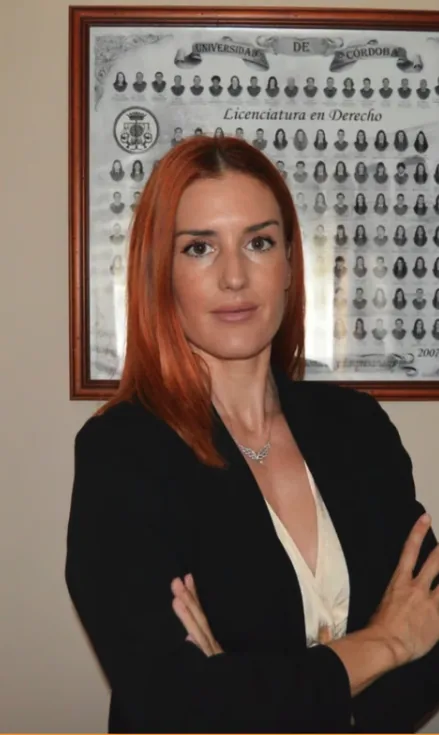
"Spanish residence law is built to keep families together, so for a partner, children or a dependent parent the answer is usually yes. What really matters is who counts as family on your route, how much extra income you must show, and whether to bring everyone at once or in stages."
— Lola Jurado · Immigration lawyer, Ilustre Colegio de Abogados de Málaga (nº 10907)
Who counts as family
The starting point is that Spanish residence rules define "family member" more narrowly than everyday usage. Cousins, siblings and friends do not qualify simply because they are close to you. The categories that are generally recognised across the main routes are:
- Spouse or registered partner — a legally married husband or wife, or a registered/stable unmarried partner. Where a partnership is not formally registered, you will usually need to evidence a genuine, stable and durable relationship, which is scrutinised more closely than a marriage certificate. Couples who are not married and where neither partner is an EU citizen should read our dedicated note on the non-lucrative visa for unmarried couples, which weighs marrying, applying separately and reuniting later.
- Dependent minor children — children under the age of majority who are dependent on the main applicant, including, in appropriate cases, adopted children and children for whom the applicant has legal custody.
- Dependent adult children — children over eighteen can sometimes be included where they remain genuinely dependent for a legitimate reason (for example, continuing studies or a health condition), but this is assessed case by case and is not automatic. Since the 2025 regulation the door has narrowed; if you already have a child in Spain approaching eighteen, see what happens when a child on the non-lucrative visa turns 18.
- Dependent parents (ascendants) — on some routes a parent of the applicant or of the spouse can be brought where the parent is genuinely dependent on the applicant. This is more restricted, and dependency and, where relevant, age conditions must be evidenced.
"Family" for immigration purposes is defined by law and dependency, not by affection — the closer the legal tie and the clearer the dependency, the stronger the case.
Because each route draws these lines slightly differently, the single most important early step is to confirm precisely who in your household qualifies before you build a timeline around them.
Applying together vs reuniting later
There are broadly two ways a family arrives in Spain, and choosing between them is one of the first strategic decisions.
The first is to include family in the initial application. Several of the modern routes — particularly the digital nomad, highly qualified and entrepreneur permits — are designed so that the main applicant and accompanying family members can be processed together, often in the same file and on a similar timeline. This is usually the smoother path: everyone travels at once, the family's status is tied to the principal from day one, and there is no separate waiting period once you are in Spain.
The second is family reunification (reagrupación familiar) after the main permit is granted. Here the principal establishes residence first and then, once settled, applies to bring family members over. This route can be necessary where the main permit does not allow simultaneous inclusion, or where circumstances change — a marriage, a new child, or a decision to move a parent — after the principal is already living in Spain. Traditional family reunification often carries its own conditions, such as a minimum period of prior legal residence and a fresh assessment of housing and income.
Which approach fits you depends on the route, whether your family members already hold documents, and how quickly you all need to be in Spain together. This is exactly the kind of decision worth mapping before anyone books a flight.
The extra income you must evidence
Bringing family is not only a matter of relationships and paperwork — it is also a matter of money. The Spanish authorities want to be satisfied that the principal applicant can support the whole household without becoming a burden on public funds. In practice this means that the financial threshold rises with each person you bring.
The benchmark used across many routes is the IPREM — the Indicador Público de Renta de Efectos Múltiples, a public income index that Spain uses as a reference for a wide range of thresholds. The main applicant must usually show a base level of means expressed as a multiple of the IPREM, and then a further amount, commonly assessed at around 100% of the IPREM per additional dependent family member. So a couple with two children will need to demonstrate meaningfully more income or savings than a single applicant on the same route.
| Household | How the means requirement generally scales |
|---|---|
| Principal applicant alone | Base means requirement for the chosen route |
| + Spouse or registered partner | Base + a further amount per additional member (commonly ~100% IPREM each) |
| + Each additional dependent (child or parent) | An additional increment per person on top of the above |
Two points matter here. First, the exact multiples, and the euro value of the IPREM, are set for each year and must be confirmed for the year you apply — the figures move, and applying with last year's numbers is a common cause of avoidable refusals. Second, the means can usually be shown through a combination of stable income and accumulated savings, but the mix accepted varies by route. We deliberately avoid quoting specific euro figures on this page because they change; we confirm the current thresholds for your household before you file.
Documents for each family member
Every family member you include generates their own document set, and this is where families most often lose time. The relationship itself has to be proven with official civil-status records, and those records almost always have to be legalised and translated before a Spanish authority will accept them.
- Marriage certificate — to evidence a spouse. For a registered partnership, the certificate of registration; for an unregistered stable relationship, additional proof of the relationship's genuineness and duration.
- Birth certificates — to evidence each child and the parent–child relationship, and to establish age for minor children.
- Proof of dependency — for adult children and for parents, evidence that the person genuinely depends on the applicant (for example, financial support, cohabitation, or medical need).
- Passports and photographs — valid travel documents for every member, meeting the validity and format rules of the route.
- Criminal-record and health documents — depending on the route and the age of the family member, these may be required for adults.
Crucially, foreign civil-status documents generally need to be apostilled (or otherwise legalised, where the Hague Apostille does not apply) and then rendered into Spanish by a sworn (jurado) translator. A marriage or birth certificate that is perfectly valid at home is not, by itself, ready for a Spanish file until it has passed through these two steps. Because the apostille is issued in the country where the document originates, gathering these papers is one of the earliest tasks to start — it frequently sits on the critical path of the whole application.
How the main routes treat families
The word "family" behaves slightly differently on each residence route. Below is a general orientation to how the routes we work with most often handle accompanying members. In every case, the specifics must be confirmed for your circumstances and the current rules.
Non-lucrative (retirement) visa
The non-lucrative visa is a natural fit for retirees and others who can support themselves from savings, pensions or passive income without working in Spain. It is frequently used by couples and by families who want to relocate together. Family members — a spouse and dependent children in particular — can generally accompany the principal, with the means requirement scaling up for each additional person as described above. Because the route is built around demonstrating sufficient resources rather than employment, the family income evidence is central. Our detailed walk-through of eligibility, means and process is in our non-lucrative (retirement) visa guide, and the family-specific version — the income multiplier per child, minors' documents and schooling — is covered on the non-lucrative visa for a family with children.
Digital nomad visa
The digital nomad visa was designed with mobile professionals and their families in mind, and it generally allows the main applicant to bring immediate family members. In many cases the family can be included in the same process as the principal, which is one of the route's practical attractions for people relocating with a partner and children. The income requirement rises for each accompanying member, and the same document and legalisation rules apply to the family. Full detail on the route, its income thresholds and how family are handled is set out in our digital nomad visa guide.
Highly qualified & entrepreneur routes
The highly qualified professional route and the entrepreneur/start-up routes (the latter often associated with the Beckham tax regime) tend to be the most family-friendly in one important respect: they frequently allow the family to be processed together with the principal and on a comparatively fast timeline. For a founder or a senior professional relocating with a partner and children, this joint, expedited processing can be decisive, because it avoids splitting the family across two separate procedures and long waits. As always, the means requirement scales per family member and the civil-status documents must be legalised and sworn-translated. You can read more about the professional route in our highly skilled professional visa guide, and about the tax dimension for entrepreneurs and founders through our Beckham materials.
On the highly qualified and entrepreneur routes, families are often processed together and faster — which is frequently the deciding factor for professionals relocating with children.
Self-employed (cuenta propia) route
The self-employed permit is the one route where the family question is really a timing question. Because the applicant's means come from a business rather than a salary or a pension, a newly launched activity has not yet generated the income the reunification test wants to see — so families often establish the main applicant first, let the activity build a documented record of autónomo income and RETA contributions, and reunite at or after the first renewal. The means test here runs against the IPREM under the general reunification regime rather than the minimum wage used by the digital nomad route. Our full walk-through of who can come, the means test and the sequencing is on the self-employed visa family members guide.
Children: schooling and healthcare
For most parents, the practical worries are not really about paperwork at all — they are about school and doctors. Once a family is resident in Spain, children have access to schooling, and families choose between the state system, the concertado (semi-private) sector and international or private schools, depending on language preferences, curriculum and location. Many international families gravitate towards areas with a strong choice of international schools, while others deliberately place younger children in the local system to immerse them in Spanish.
On healthcare, the position depends on how the family's residence and income are structured. Some residents access the public health system through employment or a special agreement, while others — particularly on routes built around private means — rely on comprehensive private health insurance, which is in any event commonly required as part of the visa evidence for the whole family. For a non-lucrative family file, every spouse or dependant should be named clearly on compliant cover, and any age or medical-history issue should be checked against the NLV insurance certificate checklist and the guide to pre-existing conditions and visa insurance. The result is that, once settled, families generally find both schooling and healthcare accessible, but the route you choose can shape which healthcare path is open to you. These are practical, general points rather than guarantees, and the specifics vary by region and by family.
Timing, sequencing and common pitfalls
Bringing a family across borders is as much a scheduling exercise as a legal one. A few patterns recur often enough to be worth flagging in advance:
- Underestimating the income for a larger household. Applicants sometimes plan around the single-person threshold and only later discover how much the requirement rises per dependent. Confirm the full household figure for the current year before committing.
- Leaving the certificates to the end. Apostilles and sworn translations depend on foreign authorities and can be the slowest part of the whole file. They should usually be started first, not last.
- Choosing the wrong sequence. Deciding to bring family later by reunification when the route would have allowed joint processing can add a waiting period and a second procedure that were entirely avoidable.
- Assuming every relative qualifies. Adult children and parents are only sometimes eligible and only where dependency is genuinely proven; building a plan around a relative who does not qualify is a costly assumption.
- Overlooking a partner's own documents. A spouse or partner may need their own criminal-record certificate, health cover and, in some cases, evidence of the relationship's stability — not just the marriage certificate.
None of these is difficult once you know it is coming; each becomes expensive when it is discovered mid-application. The value of planning the family's move as a single project — routes, income, documents and sequence together — is precisely that it turns these pitfalls into a checklist rather than a surprise. If you would like that checklist built around your own household, you can reach us through our contact page.
Frequently asked questions
Can my unmarried partner come with me?
Often yes, where the partnership is registered or where you can evidence a genuine, stable and durable relationship. Unregistered relationships are scrutinised more closely than marriages, so the supporting evidence matters.
Can I bring my parents to Spain?
Sometimes. Dependent parents (ascendants) can be included on some routes where genuine dependency — and, where relevant, age conditions — are proven. It is more restricted than bringing a spouse or minor children and must be confirmed for your route.
How much extra income do I need per family member?
Most routes add a further amount per dependant, commonly assessed at around 100% of the IPREM each, on top of the base requirement. The exact multiples and the value of the IPREM are set for each year and must be confirmed before you apply.
Is it faster to include family from the start?
Usually. On routes that permit joint processing — such as the digital nomad, highly qualified and entrepreneur routes — including family in the initial application is generally quicker than establishing residence first and reuniting them later.
What documents do my family members need?
Chiefly marriage and birth certificates to prove the relationships, plus proof of dependency where relevant, valid passports, and (depending on age and route) criminal-record and health documents. Foreign certificates generally need an apostille and a sworn translation into Spanish.
General information, not legal advice. Eligibility for family members, income thresholds (including IPREM multiples) and document requirements change and vary by route; they must be confirmed for your circumstances and the year of application. A lawyer–client relationship begins only with a signed engagement.