
Almost everything written about couples and Spain's non-lucrative residence visa quietly assumes a marriage certificate. For a large number of American and other non-EU couples — long-term partners, early retirees who never saw the point of marrying, people on their second chapter together — that assumption is wrong, and it matters. An unmarried partner is not an automatic family member on this visa, and discovering that at the consulate window is an expensive way to learn it. The good news is that unmarried couples are not stuck; there are three genuinely workable paths into Spain, each with a different price in money, time and paperwork. This page explains why the problem exists, lays the three routes side by side, and helps you see which one fits your relationship and your finances before you commit.
On this page
Why an unmarried partner is not automatically "family" The three routes, side by side Route 1 — Marry or register before you apply Route 2 — Each apply as your own principal applicant Route 3 — One leads, register and reunite later Proving a "durable relationship" without a certificate Choosing your route Frequently asked questions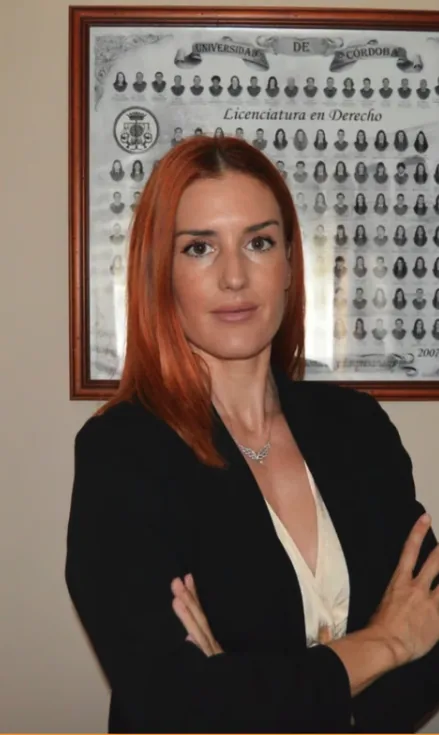
"The mistake I see unmarried couples make is assuming one of them can just be 'added on' like a spouse. Often the cleanest answer is the opposite — if you both have your own income, apply as two independent applicants and skip the relationship proof entirely. Which route is right depends on your numbers, so decide it before you book a single appointment."
— Lola Jurado · Immigration lawyer, Ilustre Colegio de Abogados de Málaga (nº 10907)
Why an unmarried partner is not automatically "family"
The non-lucrative visa lets a main applicant bring family members, but "family member" is a defined category, not a description of who you love. For this route it generally means a spouse or a registered partner treated as equivalent to a spouse, and dependent minor children (dependent ascendants can qualify under stricter conditions). An unmarried partner with no registration sits outside that list. The consulate is not being unkind; it is applying a document test, and an ordinary boyfriend or girlfriend, however committed, has no document that answers it.
This is different from the situation of someone joining a Spanish or EU citizen partner, where EU free-movement rules recognise a "durable relationship" far more readily. That route is covered separately in our page on the pareja de hecho residency route for the unmarried partner of an EU or Spanish national. If neither of you is an EU citizen — two Americans, say — that free-movement door is closed, and you are left with the three routes below. It is worth being clear about which world you are in, because advice written for the EU-partner case does not transfer.
The three routes, side by side
For an unmarried, non-EU couple who want to live in Spain together on the non-lucrative visa, there are three honest options. None of them is "add my partner as a dependant" — that is precisely the thing that does not work without a recognised relationship. Everything else is a variation on formalising the relationship, or not needing to.
| Route | What you do | Best suited to | Main cost |
|---|---|---|---|
| 1. Marry or register first | Formalise the relationship, then apply as one household with a main applicant and a dependent partner | Couples happy to marry, or with a recognised registered partnership | The decision to marry/register; document legalisation |
| 2. Two principal applicants | Each partner qualifies and applies independently; no dependency, no relationship proof | Couples who both have sufficient income of their own | Each must show the full single-applicant income, so more money overall |
| 3. One leads, reunite later | One partner gets residence, the couple registers in Spain, then family reunification is applied for | Couples where only one qualifies and marriage is not on the table | Two procedures, a waiting period, and registry conditions |
The rest of this page takes each route in turn. As you read, keep your own numbers in mind — specifically whether each of you, on your own, could clear the single-applicant income figure, because that single fact decides whether Route 2 is open to you.
Route 1 — Marry or register before you apply
The simplest fix for the document problem is to obtain the document. If you marry — anywhere, before you apply — you convert an unrecognised relationship into the cleanest possible family file. A marriage certificate, once apostilled and translated by a sworn translator, is recognised without argument, and from that point your application looks exactly like any married couple's: one main applicant holding the income, the other joining as a dependent spouse. The whole of our guidance for retired couples applying together then applies to you, including the big financial advantage described in Route 2's counterpart: the second person is costed at the smaller per-dependant add-on, not a second full share.
A registered domestic partnership can play the same role, but with more variability. Spain's own pareja de hecho registries usually require the couple to be resident in the autonomous community — hard to satisfy from abroad — and a foreign registration (a US state domestic partnership, for example) may or may not be accepted as equivalent, depending on the consulate and how the partnership was constituted. Marriage removes that uncertainty; registration reduces it only sometimes. If marrying is genuinely acceptable to you, it is almost always the lowest-friction route, and it also carries through into inheritance, tax and survivorship questions later, several of which treat spouses far more favourably than partners.
Before you marry purely for the visa: marriage changes your tax position, your matrimonial property regime and your inheritance exposure in Spain, not just your visa file. That is usually an advantage, but it should be a considered decision. Our note on how a married couple is taxed when relocating to Spain is worth reading alongside this one.
Route 2 — Each apply as your own principal applicant
This is the route unmarried couples most often overlook, and for the financially independent it is frequently the best one. If each of you can independently meet the non-lucrative visa's requirements — your own income above the single-applicant threshold, your own full health insurance, your own clean file — then you do not need to be recognised as a couple at all. You each apply as a separate principal applicant. There is no dependant, no relationship to prove, no marriage certificate, no registry. You are simply two people who each qualify and who happen to be moving to the same address.
The trade-off is money, and it is worth stating plainly. A married couple shows the main-applicant figure plus a smaller add-on for the spouse. Two principal applicants must each show the full single figure — roughly, two complete single-applicant incomes rather than one-and-a-bit. So Route 2 costs more in required resources than Route 1, but it buys you total independence: neither person's residence depends on the other, there is nothing to disprove, and if the relationship changes, neither visa is entangled with it. For two retirees each drawing a solid pension, or an early-retired couple each living off their own portfolio, this is often the shortest, safest path.
- Each partner assembles a complete individual file — income, insurance, background check, accommodation — as if applying alone. The live figures are in our note on the non-lucrative visa income requirements for 2026.
- You can still list the same Spanish address and even apply at the same appointment slot; sharing accommodation does not merge the applications.
- If one of you is close to the line, review whether savings can stand in for income to lift that individual file over the single-applicant threshold.
The honest limit of Route 2 is that it only works if both of you qualify on your own. Where one partner has the pension and the other has little income, the arithmetic breaks — that partner cannot be a principal applicant, and cannot be a dependant either without a recognised relationship. That is exactly the gap Route 3 is designed to bridge.
Route 3 — One leads, register and reunite later
When only one partner qualifies and marriage is off the table, the remaining path is sequential. The qualifying partner applies first, as a single non-lucrative applicant, and obtains residence. Once resident and registered on the padrón, that partner and the other can register a pareja de hecho in Spain, and the couple can then apply for family reunification of the partner from inside the country. In principle this delivers the outcome you wanted; in practice it asks for patience and carries conditions.
The catch is a genuine chicken-and-egg. Most Spanish partnership registries require both partners to be registered residents of the community before they will register the couple — but the second partner is exactly the person who is not yet resident. Depending on the region and its rules, this can mean the second partner first needs some lawful basis to be in Spain, or that the registration cannot be completed until certain residence conditions are met. Reunification also has its own income test, shown again at that stage, and a processing wait. It is not a formality, and it is not fast. Where it shines is the couple who cannot marry, where one partner has ample means and the other has none — the sequence eventually reunites them legally. The mechanics of the second stage are in our page on how to bring family to Spain through reunification, and the wider registered-partnership picture in the pareja de hecho guide.
If both of you can qualify alone, Route 2 is almost always simpler than Route 3 — two clean single applications beat one application plus a registration plus a reunification.
Proving a "durable relationship" without a certificate
Whenever your route depends on showing a relationship — a registration attempt, a foreign domestic partnership, or a reunification file — you are building a durability record rather than presenting a single certificate. Consulates and registries want to see that the relationship is real and enduring, and the evidence for that is cumulative. No single item proves it; the file proves it collectively.
- Shared history on paper: a joint lease or mortgage, jointly held bank accounts, shared utility bills, and correspondence to the same address over time.
- Formal recognitions: any existing domestic-partnership or civil-union certificate, beneficiary designations naming each other, and wills or powers of attorney appointing the partner.
- Continuity: photographs and travel records across years, and statements from people who know you, showing the relationship is not recent or arranged for the visa.
Because the weight given to this evidence varies so much between offices, an unmarried couple relying on a durability file should confirm what a specific consulate or registry expects before assembling it, rather than gathering documents blind. This is the part of the process where getting the standard wrong quietly is easiest, and where a review before filing pays for itself.
Choosing your route
The decision is usually settled by two questions asked in order. First: can each of you clear the single-applicant income figure on your own? If yes, Route 2 is normally the cleanest — two independent applications, nothing to prove. Second, if only one of you qualifies: is marriage acceptable to you? If yes, Route 1 turns the problem into an ordinary married-couple file and unlocks the cheaper dependant add-on. If neither — one qualifies, marriage is not on the table — Route 3 is the sequential fallback, slower but real.
What none of the routes reward is improvisation: arriving at the consulate hoping an unregistered partner will be waved through as family. Pick the route deliberately, build the matching file, and the unmarried status stops being an obstacle. If you would like a second pair of eyes on which path your numbers and relationship point to, we are glad to help — you can reach us through our contact page, and the full route is set out in our non-lucrative visa guide.
Frequently asked questions
Can my partner get the visa with me if we are not married?
Not automatically. An unmarried, unregistered partner is generally not a family member for consular reunification on the non-lucrative visa. The reliable options are to marry or register a recognised partnership first, or for each of you to qualify and apply as your own principal applicant.
Can two unmarried people each apply separately?
Yes. If each of you independently meets the income and insurance requirements, both can apply as separate principal applicants. It avoids proving the relationship, but each must show the full single-applicant income rather than the smaller per-dependant add-on, so it needs more combined resources than a married couple.
Does a US domestic partnership count as a pareja de hecho?
It may help, but it is not guaranteed. Spanish registries usually require residence in the autonomous community, and a foreign partnership certificate is weighed differently by different consulates. It can support a durable-relationship file, but should be confirmed in advance rather than assumed.
Can we just register as pareja de hecho after we arrive?
Sometimes, but most registries require both partners to be registered residents first, which the not-yet-resident partner is not. In practice one partner usually obtains residence, then the couple registers, then reunification is applied for — two procedures and a wait, not one clean step.
If we both apply separately, can we share one home and one insurance policy?
You can share the same Spanish address, and applying separately does not stop that. Health insurance, though, must fully cover each person individually — either two policies or one policy that names and fully covers you both, with no co-payments or waiting periods.
Is marrying just for the visa a good idea?
It is often the lowest-friction route and carries tax, inheritance and survivorship advantages later, but it genuinely changes your legal and financial position in Spain. Treat it as a considered decision rather than a paperwork shortcut, ideally reviewed alongside your tax plan.
General information, not legal advice. The treatment of unmarried partners on the non-lucrative visa — including which registered partnerships are recognised, the conditions for registering a pareja de hecho, and the requirements for family reunification — varies by consulate and autonomous community and changes over time; it must be confirmed for your circumstances and the office handling your application.